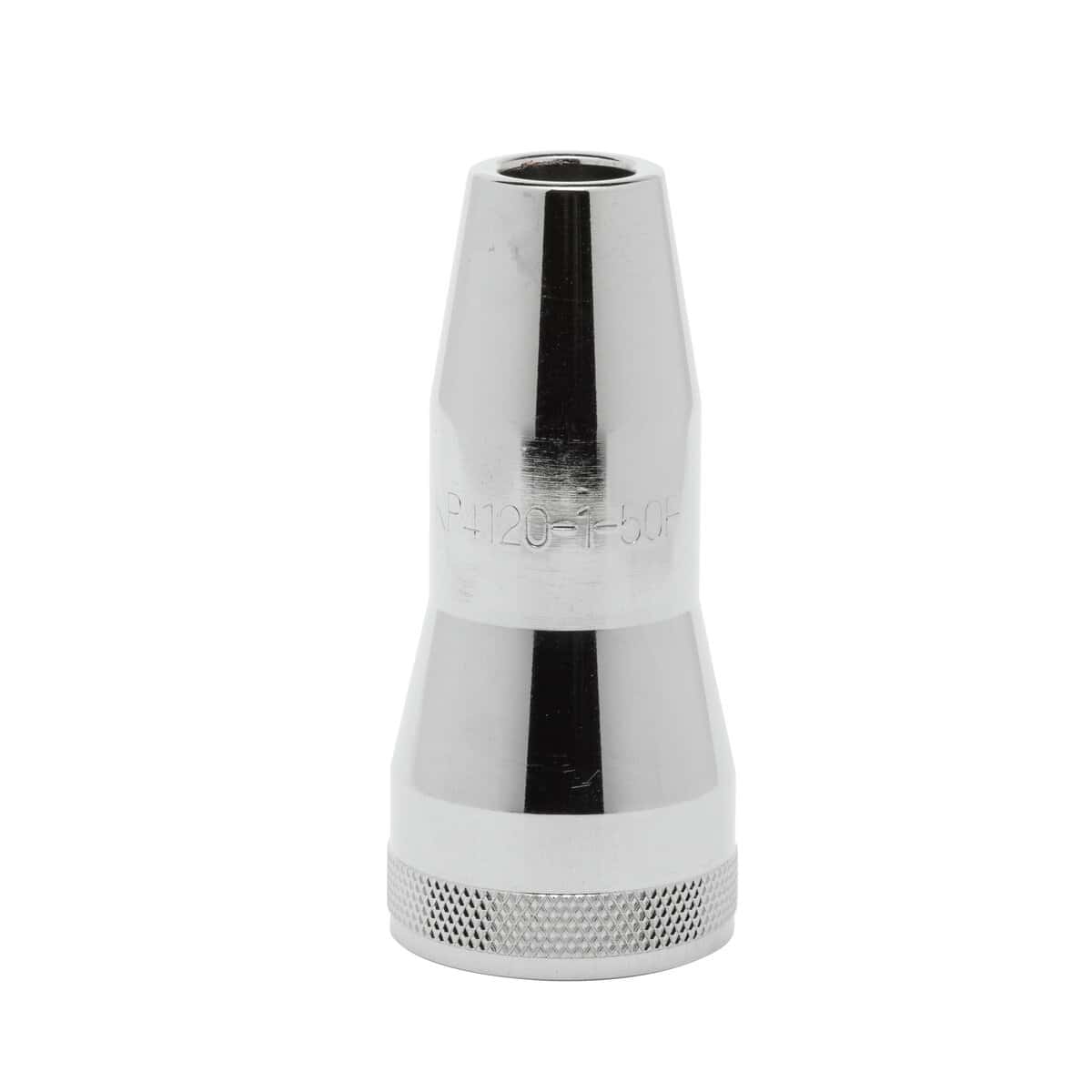
The Lincoln Electric KP4120-1-50F Magnum PRO Gas Nozzle is a specialized consumable engineered to meet the demanding requirements of automated welding environments. Designed specifically for use with Magnum PRO Water-Cooled Robotic Torches, this nozzle plays a critical role in maintaining weld quality and torch longevity. In high-production settings, where downtime equates to lost revenue, the reliability of the front-end consumables is paramount. This nozzle features a 0.500 inch (12.7 mm) bore diameter, a standard size that balances gas flow velocity with coverage area, making it suitable for a wide range of wire diameters and transfer modes.
Unlike standard air-cooled nozzles, the KP4120-1-50F is built to interface with water-cooled torch necks. This distinction is vital for high-amperage applications where heat buildup can rapidly degrade standard copper components. The design facilitates efficient thermal transfer away from the nozzle, reducing spatter adhesion and extending the service life of the part. The thread-on connection further enhances this thermal conductivity while ensuring the nozzle remains mechanically secure, even under the high acceleration and deceleration forces typical of robotic arms.
This specific model features a flush tip relationship. This means that when installed, the end of the contact tip sits flush with the end of the nozzle. Flush nozzles are often preferred in applications requiring a balance between gas coverage and accessibility. They allow the robot to maintain a closer contact-tip-to-work distance (CTWD) without the nozzle obstructing the joint, which is particularly useful in tight corners or complex fixture geometries. The flush design also helps in preventing gas turbulence that can occur with excessive stickout, ensuring a laminar flow of shielding gas over the weld pool.
As part of the Lincoln Electric Magnum PRO line, this nozzle benefits from advanced material engineering designed to resist heat and spatter. The robust construction minimizes the frequency of nozzle cleaning cycles and replacements, thereby optimizing the overall efficiency of the robotic cell. Whether used in automotive manufacturing, heavy fabrication, or general industrial automation, the KP4120-1-50F delivers the consistency required for precision welding.
| Additional Information |
|---|
| Packaging Description:1 Per Ea |
| Bore Diameter:0.500 in. (12.7 mm) |
| Cooling Method:Water Cooled |
| Compatible Torch Series:Magnum PRO Water-Cooled Robotic |
| Product Type:Gas Nozzle |
| ----- new values below ---- |
| Bore Diameter:0.500 in. (12.7 mm) |
| Nozzle Style:Flush, Thread-on |
| Cooling Method:Water Cooled |
| Compatible Torch Series:Magnum PRO Water-Cooled Robotic |
| Product Type:Gas Nozzle |
| Brand:Lincoln |
| Packaging Description:1 Per Ea |