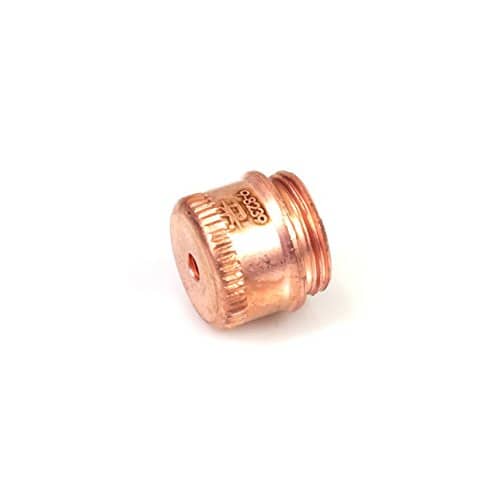
The ESAB Thermal Dynamics 21-1605 is a high-performance plasma electrode specifically engineered for the MAX 200 plasma cutting system. Designed to operate at a substantial 200 Amperes, this consumable is critical for heavy-duty industrial cutting applications. It is compatible with both Air and Oxygen (O2) plasma gases, providing versatility in various fabrication environments. The electrode features a precision-machined body that ensures optimal electrical contact and thermal transfer within the torch head, which is essential for maintaining arc stability at high currents.
In plasma cutting, the electrode is the focal point of the arc generation. The 21-1605 utilizes a high-quality emissive insert—typically hafnium for oxygen/air service—which is press-fitted into the copper body. This design allows the electrode to withstand the intense heat generated during the plasma process while minimizing erosion of the insert. Proper cooling is vital at 200A; therefore, the geometry of the 21-1605 is designed to maximize surface area contact with the torch's cooling fluid or gas flow dynamics, ensuring the electrode remains within operational temperature limits to prevent premature failure.
This specific part number is often associated with bevel cutting setups. Beveling requires exceptional arc concentricity and stability, as the plasma jet is directed at an angle relative to the workpiece. Any deviation in the electrode's geometry or wear pattern can lead to irregular bevel angles and poor cut quality. The ESAB 21-1605 is manufactured to tight tolerances to ensure the plasma arc remains centered, delivering consistent and accurate bevels. Regular inspection and timely replacement of this electrode are recommended to protect the downstream consumables, such as the nozzle and shield, from damage caused by a blown electrode.
Industrial procurement specialists should note that using genuine OEM consumables like the 21-1605 ensures compatibility with the MAX 200 power source and torch assembly. Aftermarket alternatives may not match the specific material composition or dimensional accuracy required for 200A operation, potentially leading to voided warranties or equipment damage. This electrode represents a critical component in the maintenance inventory for any facility utilizing the MAX 200 for high-volume or high-precision cutting tasks.
| Additional Information |
|---|
| Brand:ESAB, Thermal Dynamics |
| Amperage:200 |
| Process:Plasma Cutting |
| Consumable Type:Electrode |
| Gas Type:Air, Oxygen |
| Torch Compatibility:MAX 200 |
| Application:Beveling, Cutting |
| Packaging Description:1 per ea |