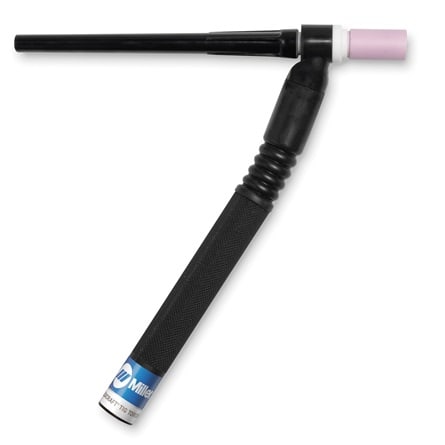
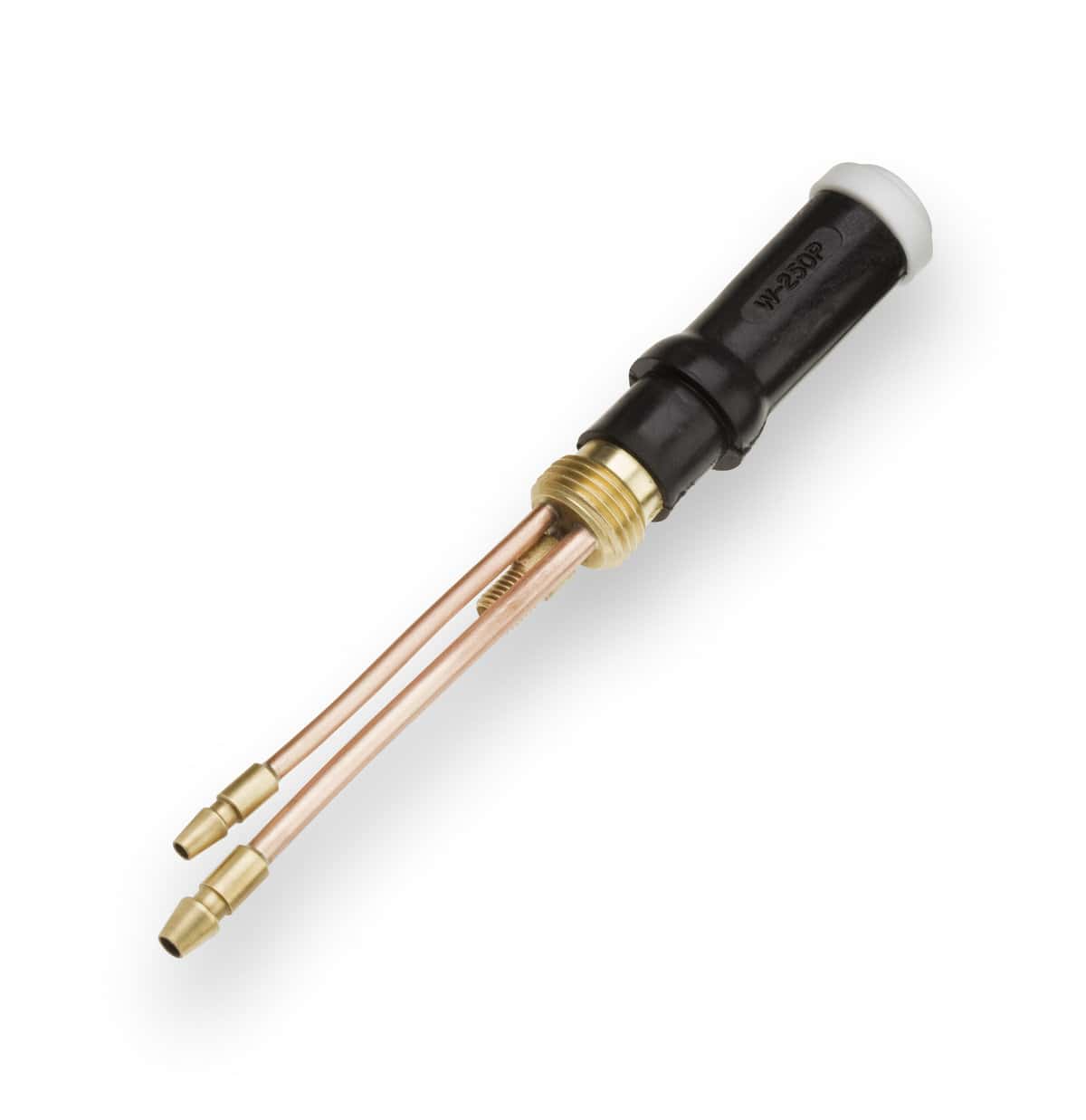
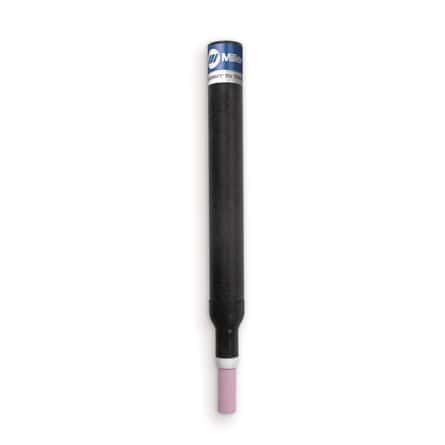
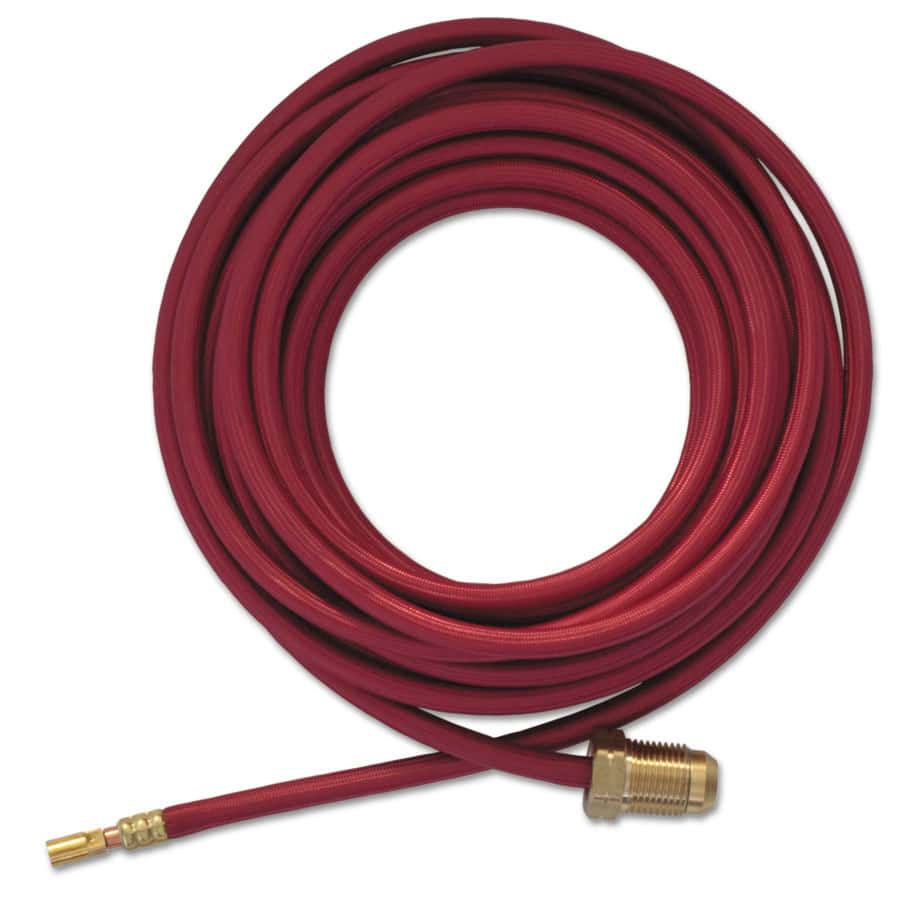
The 45V44 Gas Lens is a critical component designed to enhance the performance of Gas Tungsten Arc Welding (GTAW) systems utilizing 9, 20, 22, 24, and 25 series torches. Engineered to accommodate 3/32-inch (2.4mm) tungsten electrodes, this consumable replaces the standard collet body to fundamentally alter the fluid dynamics of the shielding gas as it exits the nozzle. Unlike standard collet bodies which can produce turbulent gas flow, the 45V44 incorporates a precision-woven multi-layer stainless steel mesh screen. This screen acts as a flow straightener, converting turbulent flow into a coherent, laminar column of gas. This reduction in the Reynolds number of the gas stream ensures a more stable protective envelope around the molten weld pool, significantly minimizing the risk of atmospheric contamination such as oxidation and porosity.
From a metallurgical perspective, the stability provided by the 45V44 allows for superior protection of reactive metals like titanium and stainless steel, where even minor atmospheric entrainment can compromise the mechanical properties of the joint. The laminar flow characteristics also permit a greater electrode extension (stick-out) beyond the nozzle cup—often up to six times the electrode diameter—without the loss of shielding integrity. This feature is indispensable for accessing restricted joint geometries, such as deep fillets or narrow grooves, where standard nozzle configurations would fail to provide adequate coverage. Constructed from high-conductivity copper and brass alloys, the body ensures efficient current transfer and thermal management, maintaining structural integrity under the thermal cycling inherent in high-amperage TIG welding cycles within the 125A to 250A range typically associated with compatible torch series.
Integration of the 45V44 Gas Lens into the welding assembly requires compatible gas lens nozzles (alumina cups), as the physical dimensions differ from standard collet bodies. This component is an essential upgrade for operators seeking to optimize process control, reduce post-weld cleaning requirements, and achieve X-ray quality welds in critical industrial applications.
| Additional Information |
|---|
| Brand:Generic |
| Item:Gas Lens |
| Diameter:3/32 in |
| Packaging Description:2 PER EA |
| Used To Weld:Steel or Stainless or Aluminum |
| Torch Compatibility:9 Series, 20 Series, 22 Series, 24 Series, 25 Series |
| Material:Copper, Brass, Stainless Steel Mesh |
| Cooling Method:Air Cooled, Water Cooled |
| Tungsten Size:3/32" (2.4mm) |
| Part Number:45V44 |