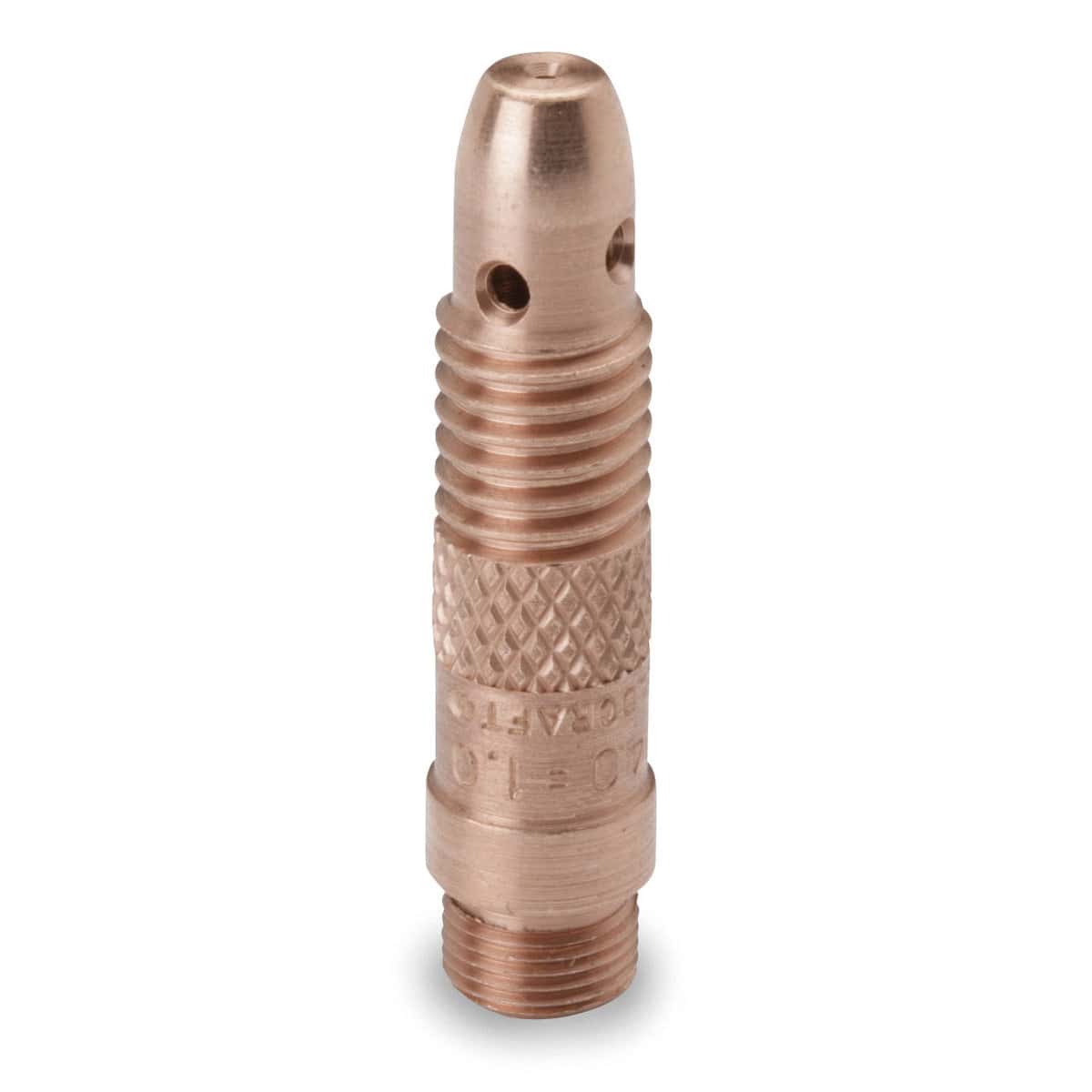
The ESAB 10N30 Collet Body is a critical component for maintaining the performance and precision of your TIG welding setup. Designed to interface seamlessly with 17, 18, and 26 series TIG torches, this collet body is engineered to hold .040" (1.0mm) tungsten electrodes securely. In the Gas Tungsten Arc Welding (GTAW) process, the collet body performs two essential functions: it secures the collet (which in turn grips the tungsten) and it transfers the welding current from the torch head to the electrode. Consequently, the material quality and machining precision of the collet body directly influence arc stability and electrical efficiency.
Manufactured from high-grade brass, the ESAB 10N30 offers excellent thermal and electrical conductivity. This ensures that the current transfer to the tungsten is consistent, minimizing resistance heating within the torch head that can lead to premature component failure. The brass construction also provides the necessary durability to withstand the thermal cycling inherent in welding operations. Over time, collet bodies can become deformed or clogged with spatter and contaminants, leading to poor gas coverage or unstable arcs. Regular replacement with high-quality consumables like the ESAB 10N30 is recommended to ensure optimal weld quality.
This product is supplied in a pack of five, providing welding professionals with necessary spares to minimize downtime. The 10N30 is a standard industry part number, ensuring broad compatibility across various torch brands that utilize the 17/18/26 form factor. Whether you are welding thin gauge stainless steel or precision aluminum components requiring a .040" electrode, this collet body provides the mechanical stability and electrical performance required for X-ray quality welds.
Proper installation involves threading the collet body into the torch head, inserting the matching collet, and then tightening the back cap. The gas cup (nozzle) then threads onto the collet body. Ensuring all threads are clean and components are hand-tightened correctly will prevent gas leaks and ensure efficient shielding gas coverage, which is vital for preventing oxidation and porosity in the weld pool.
| Additional Information |
|---|
| Packaging Description:pack of 5 |
| Brand:ESAB |
| Consumable Type:Collet Body |
| Tungsten Diameter:0.040" (1.0mm) |
| Torch Compatibility:17 Series, 18 Series, 26 Series |
| Material:Brass |
| Part Number:10N30 |