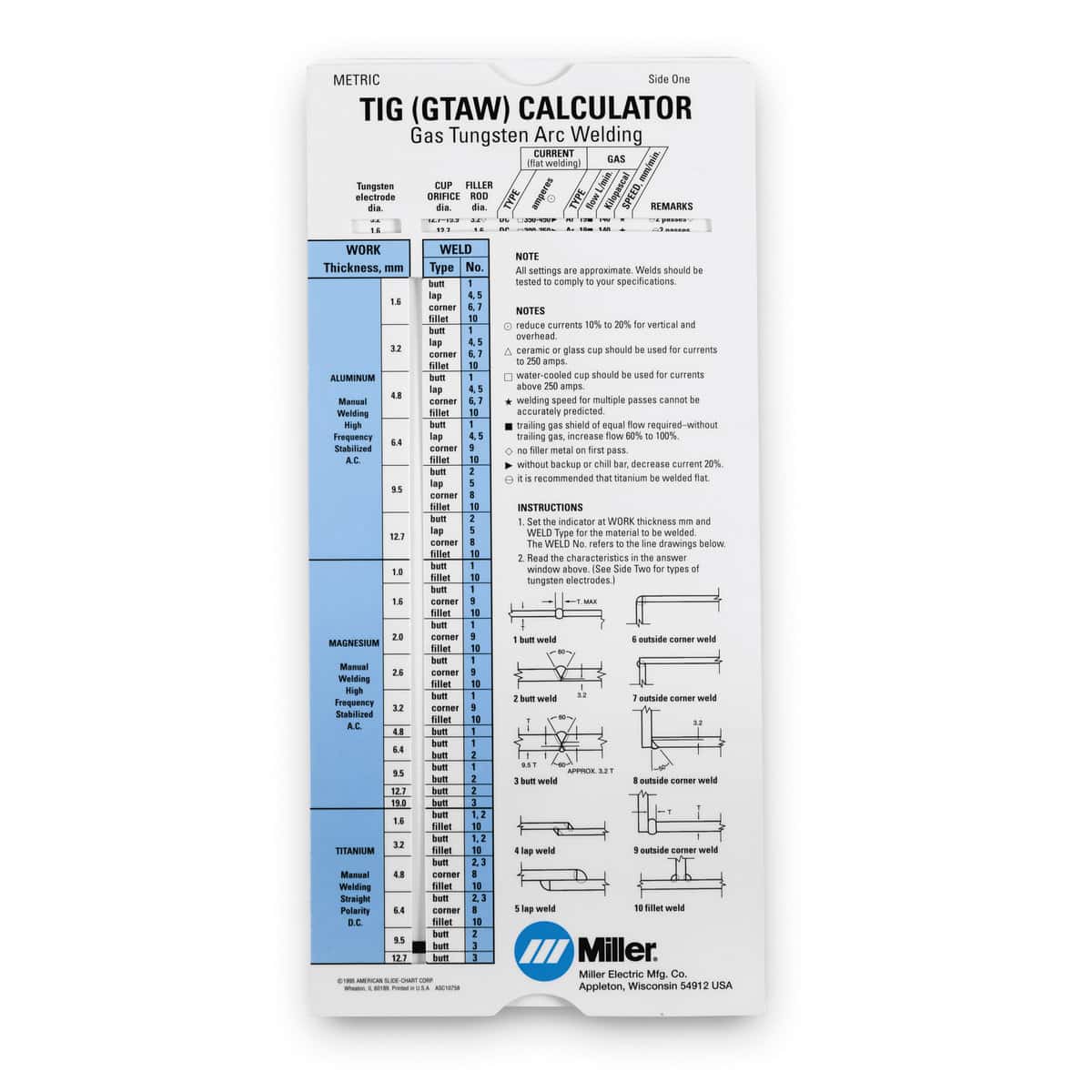
The Miller 175848 TIG Calculator - Metric is an essential reference tool designed for professional fabricators, welding engineers, and students who require precise welding parameters in metric units. In the precision-demanding world of Gas Tungsten Arc Welding (GTAW), correct machine setup is critical for achieving high-quality welds, particularly when working with sensitive materials like aluminum and stainless steel. This slide-rule style calculator provides an immediate, reliable source of data, eliminating the need to consult bulky manuals or search online for unverified charts.
Designed specifically for the metric system, this tool is indispensable for workshops operating with international standards or specifications requiring millimeter measurements. By simply sliding the card to the material thickness you are welding, the calculator reveals a comprehensive set of recommended parameters. These include the optimal tungsten electrode diameter, filler rod size, cup size (orifice diameter), shielding gas flow rate (L/min), and the suggested amperage range. This level of detail ensures that operators can set up their power sources correctly from the very first arc strike, minimizing rework and material waste.
The calculator covers the three most common materials encountered in TIG welding: Aluminum, Stainless Steel, and Mild Steel. Each material section is calibrated to reflect the specific heat input and consumable requirements necessary for sound structural welds. The physical construction of the calculator is designed for the industrial environment; it is durable, compact, and requires no batteries or power, making it a reliable companion in the field or on the shop floor. Whether you are calculating heat input for a critical code weld or simply setting up for a quick repair, the Miller TIG Calculator ensures your starting parameters are accurate and consistent with industry best practices.
Incorporating this tool into your daily workflow standardizes your welding procedures. It serves as an excellent training aid for apprentices learning the relationship between material thickness and amperage, and it acts as a quick verification tool for seasoned veterans. With the Miller 175848, you ensure that every weld begins with the correct foundation.
| Additional Information |
|---|
| Brand:Miller |
| Packaging Description:1 Per Ea |
| Product Type:Weld Calculator |
| Measurement System:Metric |
| Process:TIG (GTAW) |
| Material Compatibility:Aluminum, Stainless Steel, Mild Steel |