Skip to Main Content

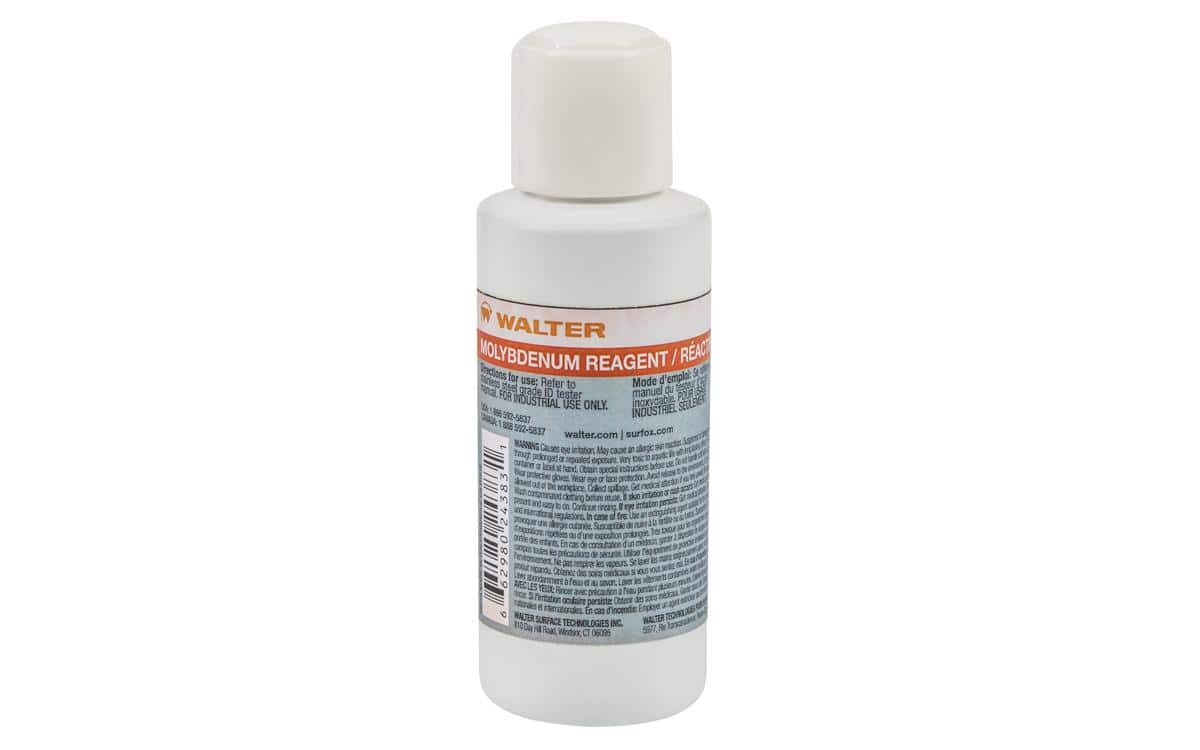
54A051 - Walter Molybdenum Spot Test Reagent 100ml

Packaging: 1 per each
$221.34/ea $160.47/1 per each only $160.47/eaSave 28%

Usually ships within 3-5 business days

SKU: 54A051 Categories: ,

OVERVIEW

Reliable Material Verification with Walter Molybdenum Reagent

In the world of industrial fabrication and supply, material traceability is paramount. The Walter Molybdenum Reagent (54A051) provides a fast, reliable, and cost-effective solution for identifying stainless steel grades, specifically distinguishing between AISI 304 and AISI 316. As supply chains become more complex, the risk of material mix-ups increases. Using the wrong grade of stainless steel in a corrosive environment can lead to catastrophic failure and significant liability. This 100ml reagent bottle is an essential tool for Quality Assurance managers, receiving departments, and shop floor supervisors who need to validate raw materials before processing.

The science behind the reagent is straightforward yet powerful. Molybdenum is the key alloying element that gives 316 stainless steel its superior corrosion resistance compared to the standard 304 grade. When applied to the metal surface, this reagent reacts specifically to the presence of Molybdenum. A positive reaction (typically a color change) confirms the presence of Molybdenum, indicating the material is likely 316 grade. A lack of reaction suggests the absence of Molybdenum, pointing towards 304 grade. This simple spot test eliminates the guesswork and provides immediate visual confirmation.

Designed for professional industrial use, the Walter 54A051 comes in a convenient 100ml bottle, sufficient for hundreds of individual tests. It is a non-destructive testing (NDT) chemical that allows for on-the-spot verification without the need for expensive X-ray fluorescence (XRF) guns or sending samples to external laboratories. Whether you are auditing inventory, checking incoming shipments, or verifying scrap metal, this molybdenum reagent is a critical line of defense against material non-conformance.

Key Industrial Benefits

  • Risk Mitigation: Prevents the accidental use of lower-grade stainless steel in critical applications.
  • Cost Efficiency: A fraction of the cost of electronic analyzers.
  • Speed: Delivers results in minutes, keeping production lines moving.
Additional Information
packaging-description:1 per each
----- new values below ----
Volume:100ml
Application:Stainless Steel Grade Identification
Target Material:Stainless Steel 304, Stainless Steel 316
Brand:Walter
Format:Liquid
Packaging Description:1 per each

INCLUDED

  • 1x 100ml Bottle of Molybdenum Reagent

APPLICATIONS

  • Distinguishing AISI 304 from AISI 316 stainless steel
  • Incoming material inspection
  • Sorting scrap metal
  • Verifying remnant stock in fabrication shops
  • Quality control in food and beverage equipment manufacturing
  • Marine application material verification

FAQ

It is used to detect the presence of Molybdenum in stainless steel, primarily to distinguish between grade 304 (no Moly) and grade 316 (contains Moly).

Typically, a color change indicates the presence of Molybdenum (suggesting 316), while no reaction indicates its absence (suggesting 304). Always follow the specific instructions on the bottle label.

It is a chemical spot test. It may leave a slight mark or discoloration where the drop was applied, which should be cleaned off after testing.

The 100ml bottle contains enough fluid for hundreds of spot tests, as only a small drop is required for each test.

This specific reagent is targeted at Molybdenum detection. While it helps separate Moly-bearing alloys from non-Moly ones, it does not provide a full chemical analysis to identify every specific grade.

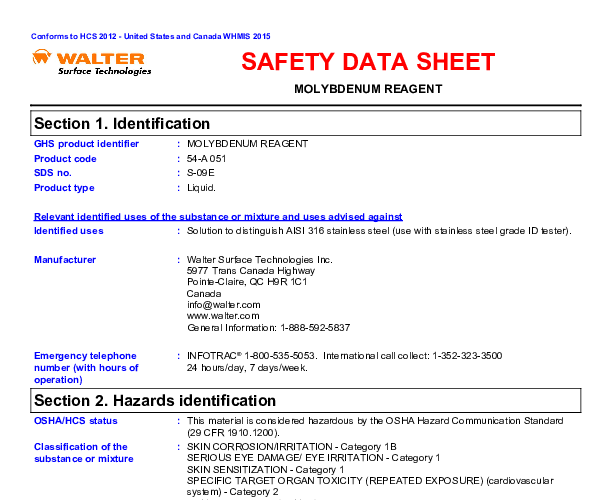
It is a chemical reagent and should be handled with care. Wear appropriate PPE (gloves and eye protection) and refer to the Safety Data Sheet (SDS) for full safety information.

Some molybdenum tests are enhanced by a battery (electrochemical test), but many reagents work as a simple chemical spot test. Check the specific application instructions for the Walter 54A051 method.

Chemical reagents typically have a shelf life. It is best to store the bottle in a cool, dark place and keep the cap tightly sealed when not in use to maximize longevity.

CATALOGUE & SPEC SHEETS

Safety Data Sheet