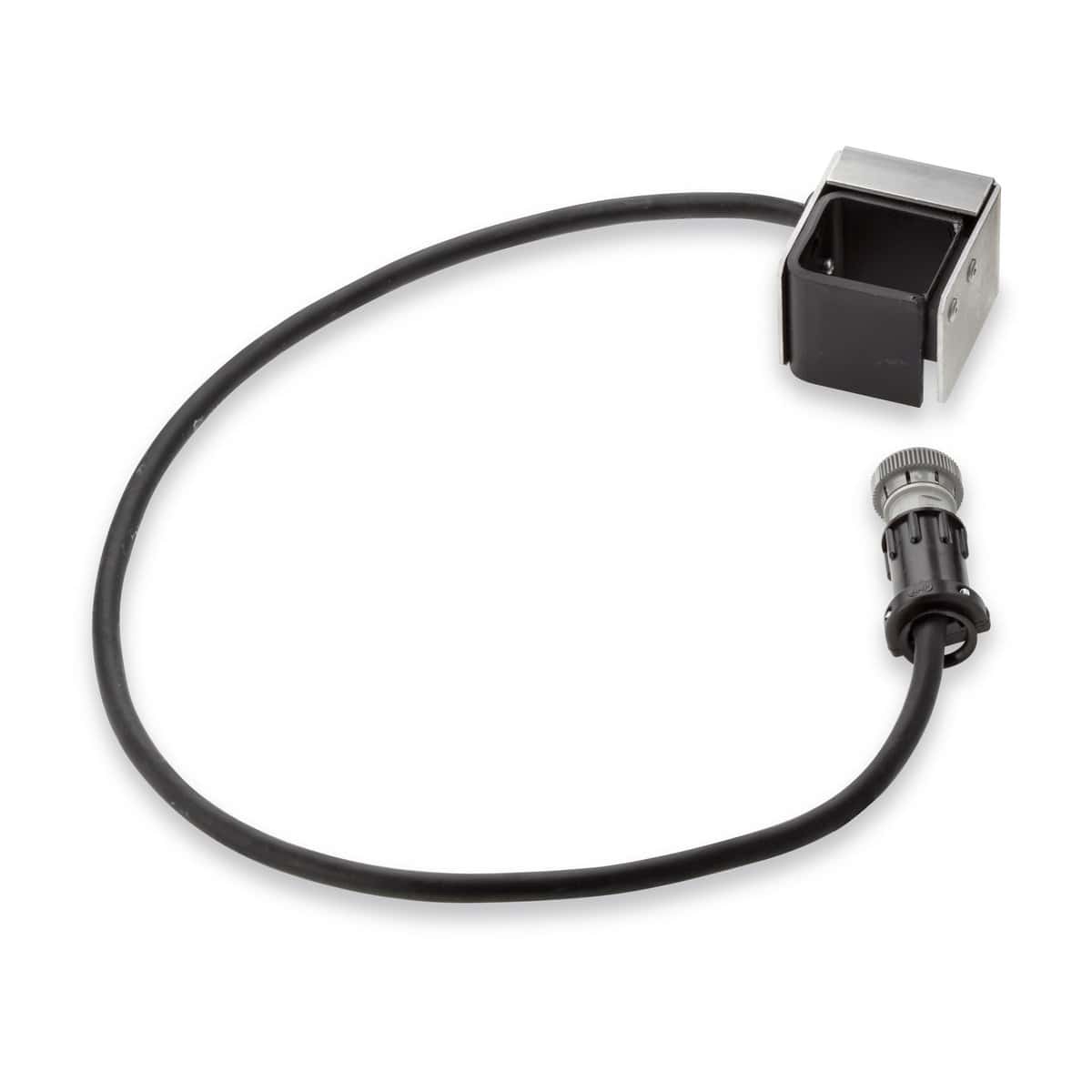
The Miller 160963 Weld Current Sensor is a critical component in the control loop architecture of advanced Miller inverter power sources. Functioning as a Hall Effect transducer, this device is responsible for non-contact measurement of the DC welding output current. By detecting the magnetic field generated by the current flowing through the bus bar, the sensor outputs a proportional low-voltage signal to the main control PCB. This feedback loop is essential for the machine's ability to maintain a stable arc, regulate amperage according to the user's settings, and respond dynamically to changes in arc length and voltage.
In sophisticated equipment such as the Miller XMT 304, XMT 350, and Invision series, the accuracy of the current sensor directly correlates to the quality of the weld output. A drifting or failing sensor can lead to significant discrepancies between the set amperage and the actual output, resulting in poor fusion, excessive spatter, or erratic arc starts. The 160963 is engineered to meet the specific calibration requirements of Miller's control logic, ensuring that the feedback signal remains linear and temperature-stable across the machine's operating range.
This OEM part is designed for durability within the harsh electrical and thermal environment of an industrial power source. It features a robust housing and a pre-terminated connector for secure integration with the machine's wiring harness. When diagnosing faults related to output regulation or specific "Help" codes indicating current sensing errors, replacing a suspect transducer with the genuine Miller 160963 is the standard repair procedure to restore factory performance.
Technicians should verify compatibility with the specific serial number of the host machine, as Miller utilizes various sensor revisions across different generations of equipment. Proper installation ensures the closed-loop control system functions correctly, protecting the power modules from over-current conditions and ensuring the welder meets its rated duty cycle and output specifications.
| Additional Information |
|---|
| Brand:Miller |
| Packaging Description:1 per each |
| Product Type:Current Sensor, Hall Effect Transducer |
| Compatibility:Miller XMT Series, Miller Invision Series, Miller AlumaPower |
| Part Number:160963 |