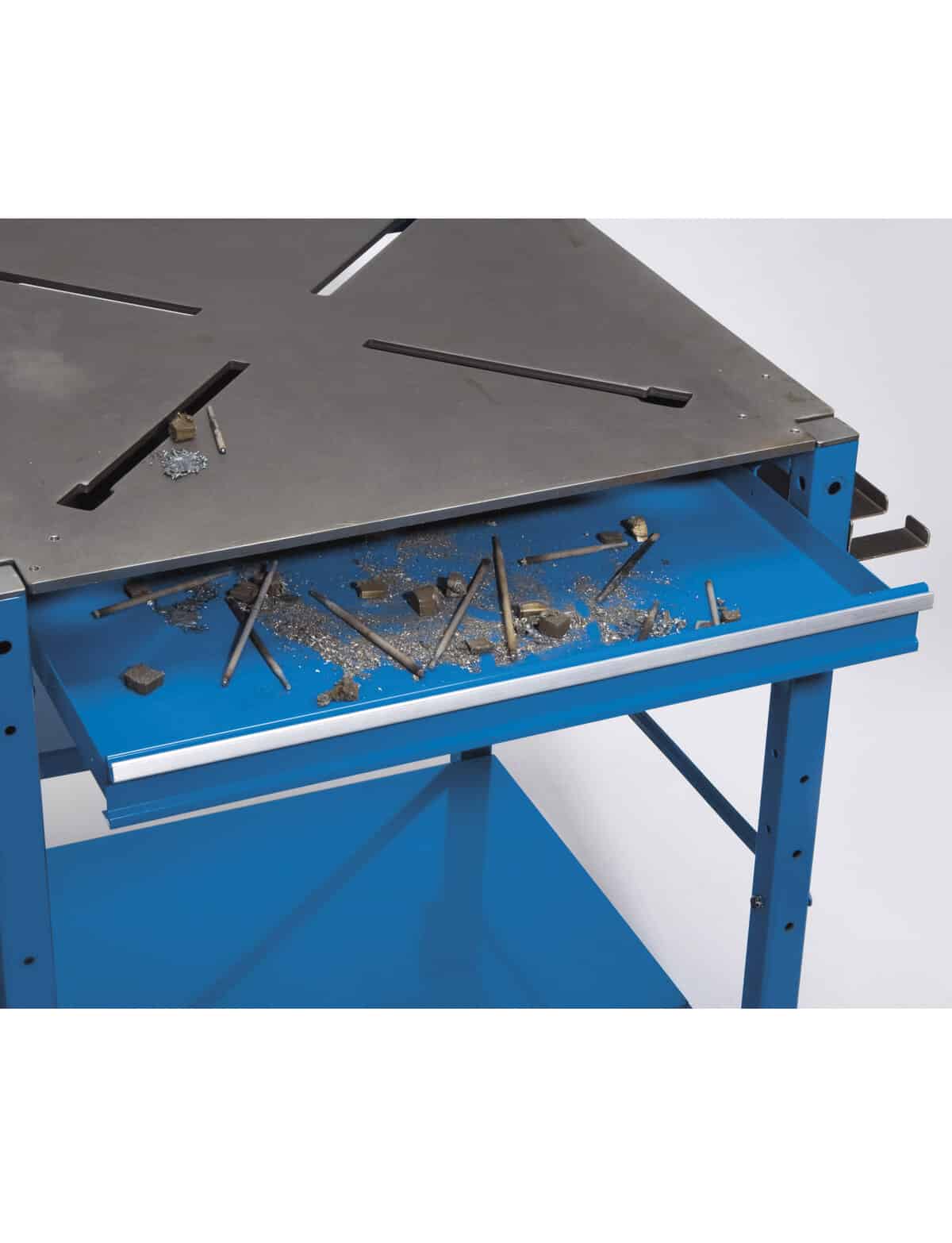
The Miller ArcStation Dust Tray (SKU: 300605) is a specialized accessory engineered to enhance the functionality and safety of Miller's ArcStation welding workbenches. Specifically designed for compatibility with the 30S and 60S series, this component addresses the critical need for debris management in high-temperature fabrication environments. Constructed from heavy-gauge steel, the tray is built to withstand the thermal shock of falling slag, molten spatter, and hot grinding particulate that naturally passes through the open X-pattern tabletop design of the ArcStation.
In industrial applications, the preservation of secondary equipment is paramount. The ArcStation typically features lower shelving for the storage of welders, wire feeders, or plasma cutters. Without the interposition of the 300605 Dust Tray, these expensive machines are vulnerable to the accumulation of conductive dust and direct contact with hot debris falling from the work surface above. This tray acts as a robust barrier, effectively intercepting contaminants and preserving the integrity of stored hardware. The unit is designed for seamless integration, sliding effortlessly into the frame structure of the workbench, ensuring that it does not impede the operator's workflow while providing maximum coverage.
Beyond its primary protective function, the tray offers significant maintenance advantages. It transforms the cleanup process from a labor-intensive task involving sweeping under and around the table to a simple removal and dumping of the tray. For fabrication setups where the X-pattern top is not utilized for through-table clamping or cutting, the tray's rigid steel construction allows it to be repurposed as a heavy-duty storage drawer. This versatility makes it an invaluable component for optimizing workspace organization, holding small consumables, clamps, or measuring tools securely. The Miller 300605 represents a logical investment in shop hygiene and equipment longevity.
| Additional Information |
|---|
| Brand:Miller |
| Packaging Description:1 Per Ea |
| Item:Accessory |
| Material:Steel |
| Compatibility:Miller ArcStation 30S, Miller ArcStation 60S |
| Function:Debris Collection, Shelf Protection |
| Weight:21 lbs |