Canadian owned and operated

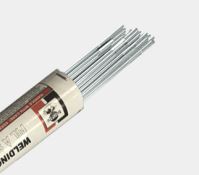
The Exocor ER316L TIG Welding Rod is a high-performance stainless steel filler metal designed for the Gas Tungsten Arc Welding (GTAW) process. Engineered to meet AWS A5.9 specifications, this consumable is primarily composed of chromium, nickel, and molybdenum. The addition of 2.0% to 3.0% molybdenum significantly enhances the alloy's resistance to pitting and crevice corrosion, particularly in chloride-containing environments. This makes it the filler of choice for joining Type 316 and 316L base metals, as well as for surfacing applications where high corrosion resistance is required.
The "L" designation indicates a low carbon content (maximum 0.03%), which is critical for preventing carbide precipitation during the welding process. This feature preserves the corrosion resistance of the weld heat-affected zone (HAZ) without the need for post-weld heat treatment (PWHT). The 0.035-inch (0.9mm) diameter is specifically suited for welding thin-gauge materials, root passes in pipe welding, or applications requiring precise heat input control. The rods are supplied in 36-inch cut lengths, cleaned and packaged in a durable 10lb tube to prevent contamination and ensure long shelf life.
Metallurgically, the deposit provides a stable austenitic structure with a controlled ferrite number, reducing the risk of micro-fissuring while maintaining excellent ductility and toughness at cryogenic temperatures. It is compatible with DCEN (Direct Current Electrode Negative) polarity and requires 100% Argon shielding gas for optimal results.
| Additional Information |
|---|
| Weld Process:TIG |
| AWS Spec :ER308L, ER316L |
| Grade:308, 316 |
| Polarity:AC or DC+, DCEN |
| Material Composition:316L Stainless Steel |
| Length :36 inches |
| Shielding Gas Requirement:100% Argon |
| Tensile Strength:85,000 PSI (Typical) |
| ----- new values below ---- |
| Material Composition:316L Stainless Steel |
| Length:36 Inches |
| Shielding Gas Requirement:100% Argon |
| Polarity:DCEN |
| Alloy Content:Molybdenum Bearing |
| Tensile Strength:85,000 PSI (Typical) |
| Brand:Exocor |
| AWS Spec:ER316L |
| Diameter:0.035 |
| Grade:316 |
| Packaging:10lb tube |
| Weld Process:TIG |