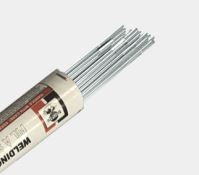
The Harris ERCuSi-A Silicon Bronze MIG Wire is a premium copper-based alloy designed for the Gas Metal Arc Welding (GMAW) process. This .035-inch diameter wire is supplied on a 10-pound spool with an 8-inch diameter, making it compatible with a wide range of industrial wire feeders and welding machines. The alloy composition meets the rigorous AWS A5.7 specifications, ensuring consistent chemical and mechanical properties for critical welding applications. Primarily composed of copper with approximately 3% silicon and trace amounts of manganese, tin, and zinc, this wire offers excellent fluidity and corrosion resistance.
One of the primary technical applications for this wire is "braze welding" or MIG brazing. Unlike traditional fusion welding where the base metal is melted, braze welding relies on the filler metal melting at a lower temperature than the base material. This characteristic makes Harris Silicon Bronze particularly effective for joining coated sheet steels, such as galvanized iron. The lower heat input required for the process minimizes the disturbance of the zinc coating on the backside of the weld, preserving the corrosion-resistant properties of the base material and reducing the risk of burn-through on thin gauges.
In addition to coated steels, this alloy is the standard choice for welding copper-silicon and copper-zinc base metals to themselves or to steel. It is also frequently employed for surfacing applications where a corrosion-resistant overlay is required. The wire requires the use of 100% Argon shielding gas to protect the molten pool from atmospheric contamination and to ensure a stable arc. Preheating is generally not required for thin sections, though it may be beneficial for heavier copper base metals to ensure proper fusion. Each spool is clearly labeled with heat numbers and grade identification for traceability in certified environments.
Key Technical Specifications:
| Additional Information |
|---|
| Brand:Harris |
| Diameter:0.035 in |
| Grade:Silicon Bronze |
| Packaging:10 lb Spool |
| Weld Process:MIG (GMAW) |
| AWS Classification:ERCuSi-A |
| Spool Diameter:8" |
| Shielding Gas Requirement:100% Argon |
| Material Composition:Copper Silicon Alloy |
| Wire Type:Solid |
| Packaging Description:10lb spool |
| Position:N/A |
| Polarity:N/A |