Canadian owned and operated

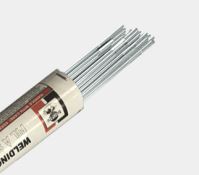
The Josef A40 Aluminum Stick Electrode (2.5mm) is a premium consumable designed for the Shielded Metal Arc Welding (SMAW) of aluminum and its alloys. Engineered by Josef Gas, this electrode bridges the gap between portability and performance, allowing welders to execute high-quality aluminum repairs in the field without the logistical burden of shielding gas cylinders. The A40 features a high-purity aluminum core wire coated with a sophisticated flux formulation. This unique coating serves a dual purpose: it stabilizes the electric arc for smoother operation and chemically cleans the weld pool, effectively lifting the stubborn oxide layer that typically plagues aluminum welding.
Ideally suited for maintenance and repair operations, the Josef A40 excels in joining cast, wrought, and extruded aluminum grades. It is particularly effective for repairing defects in aluminum castings, fixing cracks in transmission housings, or patching aluminum tanks and piping systems. The 2.5mm diameter offers excellent control for thin-to-medium gauge materials, providing a balance between deposition rate and heat input. When used with Direct Current Electrode Positive (DCEP), the electrode delivers a cleaning action that ensures sound, porous-free welds with good mechanical properties.
One of the standout features of the Josef A40 is its ability to produce a weld deposit that closely matches the color and corrosion resistance of standard aluminum base metals. This makes it an excellent choice for architectural repairs or visible components where aesthetics are a concern. While aluminum stick welding requires a specific technique—typically a faster travel speed and a shorter arc length compared to steel—the Josef A40 is formulated to be as user-friendly as possible, offering a stable burn-off rate and easy slag removal. For optimal results, preheating thicker sections is recommended to ensure proper fusion and prevent cold lapping.
Storage and handling are critical for flux-coated aluminum electrodes. The Josef A40 is packaged to minimize moisture pickup, but once opened, it should be stored in a dry environment or a rod oven to maintain its performance characteristics. Whether you are a professional industrial welder or a maintenance technician, the Josef A40 provides a reliable, gas-free solution for your aluminum welding challenges.
| Additional Information |
|---|
| Packaging Description:2.5 kg tube |
| Weld Process:Electrode |
| Grade:Aluminum |
| Packaging:5lb tube |
| Brand:Josef |
| Diameter:2.5mm |
| Position:All Position |
| Polarity:DC+, DCEP |
| Rod Type:Stick |
| Core Material:Aluminum |
| Welding Position:Flat, Horizontal |
| Coating Type:Extruded Flux |
| ----- new values below ---- |
| Rod Type:Stick |
| Core Material:Aluminum |
| Polarity:DCEP |
| Welding Position:Flat, Horizontal |
| Coating Type:Extruded Flux |
| brand:josef |
| diameter:2-5mm |
| grade:aluminum |
| weld-process:electrode |