Canadian owned and operated

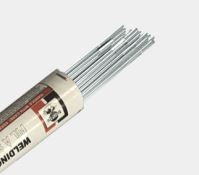
The Josef C32 3.2mm Cast Iron Stick Electrode is a premium maintenance and repair consumable designed specifically for the challenging demands of welding cast iron. Known for its versatility and reliability, the C32 electrode features a Ferro-Nickel (NiFe) composition that provides a perfect balance of strength and ductility. This makes it an essential tool for maintenance crews, mechanics, and fabricators who frequently encounter broken castings, cracked housings, or worn-out machinery parts.
One of the standout features of the Josef C32 is its ability to produce fully machinable welds. After the welding process is complete, the deposit can be drilled, tapped, or milled, allowing you to restore parts to their original specifications. This is particularly critical for repairing engine blocks, pump casings, gearboxes, and other precision components where dimensional accuracy is paramount. The electrode is formulated to operate smoothly on both AC and DC power sources, ensuring compatibility with a wide range of welding machines found in workshops and field service trucks.
The C32 is not just for repairing cracks; it is also an excellent choice for joining dissimilar metals. If you need to weld a steel bracket to a cast iron base, the Josef C32 provides a strong, crack-resistant bond that withstands thermal expansion and contraction. Its special coating helps to stabilize the arc and minimize spatter, even when welding on castings that may be impregnated with oil or grease. Whether you are performing an emergency repair on agricultural equipment or restoring a vintage casting, the Josef C32 delivers professional results you can trust.
| Additional Information |
|---|
| Packaging Description:5kg tube |
| Weld Process:Electrode |
| Grade:Cast Iron |
| Packaging:5kg tube |
| Brand:Josef |
| Diameter:3.2mm |
| Position:All Position |
| Polarity:DC+ / AC |
| Rod Type:Stick Electrode |
| Core Material:Nickel-Iron (NiFe) |
| AWS Classification:ENiFe-CI Equivalent |
| Amperage Range:70-110 A |
| Welding Position:Flat, Horizontal, Overhead, Vertical |
| ----- new values below ---- |
| Rod Type:Stick Electrode |
| Core Material:Nickel-Iron (NiFe) |
| AWS Classification:ENiFe-CI Equivalent |
| Amperage Range:70-110 A |
| Welding Position:Flat, Horizontal, Vertical, Overhead |
| Machinability:Yes |
| brand:josef |
| diameter:3-2mm |
| grade:cast-iron |
| weld-process:electrode |
| polarity:dc-ac |
| position:all-position |