Canadian owned and operated

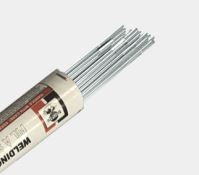
The Magnesium 780 TIG Rod (Internal SKU: FSH0780.25K) is a specialized filler metal designed for the Gas Tungsten Arc Welding (GTAW) of magnesium and magnesium alloys. Sourced from the FSH Welding Group, known for their high-quality Selectarc range, this product is essential for fabricators and repair shops dealing with lightweight, high-performance components. Packaged in a convenient 1 kg tube, these 2.5mm (approx. 3/32") rods offer the perfect balance of deposition rate and puddle control.
Magnesium is notoriously difficult to weld due to its high reactivity with oxygen and low melting point. The Magnesium 780 rod is formulated to mitigate these challenges, providing a stable arc and excellent wetting action. It is particularly well-suited for maintenance and repair operations (MRO) where matching the base metal's mechanical properties is critical. Whether you are fixing a vintage chainsaw casing, a high-end automotive rim, or an aerospace component, this filler rod ensures a sound, porous-free weld deposit when used with proper cleaning techniques and shielding gas.
Unlike generic filler metals, this rod is engineered to minimize cracking—a common issue in magnesium welding. Its composition is balanced to provide ductility and strength, making it compatible with common cast and wrought magnesium grades such as AZ31, AZ61, and AZ92. At Josef Gas, we understand that sourcing exotic filler metals can be a challenge; we stock this item to ensure you have the right tools for even the most niche welding jobs.
| Additional Information |
|---|
| Weld Process:TIG |
| Packaging:10lb tube, 1kg tube |
| Diameter:2.5mm, 2.5mm (3/32") |
| Material Composition:Magnesium Alloy |
| Rod Type:TIG Cut Length |
| Shielding Gas Requirement:100% Argon, Argon/Helium Mix |
| Applications:Aerospace, Automotive Components, Magnesium Castings |
| Packaging Type:1kg Tube |
| ----- new values below ---- |
| Material Composition:Magnesium Alloy |
| Rod Type:TIG Cut Length |
| Diameter:2.5mm (3/32") |
| Shielding Gas Requirement:100% Argon, Argon/Helium Mix |
| Applications:Magnesium Castings, Automotive Components, Aerospace |
| Packaging Type:1kg Tube |
| brand:n-a |
| diameter:2-5mm |
| weld-process:tig |
| packaging:1kg-tube |