Canadian owned and operated

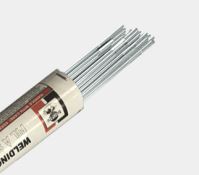
The Hobart Hoballoy 10018-D2 is a premium quality, low-hydrogen stick electrode designed for the welding of high-tensile steels. Engineered with a manganese-molybdenum alloy core, this electrode delivers exceptional mechanical properties, making it a staple in industries requiring robust structural integrity. The "10018" classification indicates a minimum tensile strength of 100,000 psi, ensuring that welds can withstand significant stress and load. This specific variant comes in a substantial 1/4-inch (6.4mm) diameter, packaged in a 50lb hermetically sealed can to preserve the low-hydrogen characteristics of the flux coating.
Industrial fabricators rely on the Hoballoy 10018-D2 for its consistency and X-ray quality performance. The electrode is formulated to join high-strength low-alloy (HSLA) steels, such as ASTM A302 Grade B and A533 Grade B, often found in pressure vessels and heavy machinery. The addition of manganese and molybdenum not only boosts strength but also enhances creep resistance at elevated temperatures. This makes it an excellent choice for power generation components and petrochemical piping systems where durability under thermal stress is critical.
At Josef Gas, we understand the importance of moisture control in low-hydrogen consumables. The Hobart Hoballoy 10018-D2 features a specially designed coating that resists moisture pickup, significantly reducing the risk of hydrogen-induced cracking (cold cracking) in the heat-affected zone. This is particularly vital when welding thick sections of hard-to-weld steels. The 1/4-inch diameter is specifically optimized for high-deposition welding in the flat and horizontal positions, allowing for efficient filling of large groove welds in heavy plate fabrication.
Choosing the right filler metal is paramount for safety and compliance in heavy industrial projects. Hobart’s manufacturing processes ensure strict adherence to AWS A5.5 specifications. Whether you are repairing earthmoving equipment or fabricating structural components for cranes, the Hoballoy 10018-D2 offers the reliability and strength required for the most demanding engineering challenges.
| Additional Information |
|---|
| Packaging Description:50lb can |
| AWS Spec :E10018-D2 |
| Diameter:1/4" (6.4mm) |
| Polarity:DC+ |
| Position:Flat/Horizontal |
| Rod Type:Stick Electrode |
| Core Material:Low Alloy Steel |
| Coating Type:Low Hydrogen Iron Powder |
| AWS Classification:E10018-D2 |
| Tensile Strength:100,000 psi min |
| Welding Position:Flat, Horizontal Fillet |
| ----- new values below ---- |
| Rod Type:Stick Electrode |
| Core Material:Low Alloy Steel |
| Coating Type:Low Hydrogen Iron Powder |
| AWS Classification:E10018-D2 |
| Tensile Strength:100,000 psi (min) |
| Welding Position:Flat, Horizontal Fillet |
| Moisture Resistance:Moisture Resistant Coating |
| Brand:Hobart |
| AWS Spec:E10018-D2 |
| Diameter:1/4" (6.4mm) |
| Packaging Description:50lb can |
| Polarity:DC+ |
| Position:Flat/Horizontal |